Surface preparation is an essential process in modern metal manufacturing, maintenance, repair, and refurbishment.
Rust, oxide layers, oil contamination, paint, dirt, and other surface residues can affect the appearance, performance, welding quality, coating adhesion, and service life of metal products.
Traditional cleaning methods such as grinding, sandblasting, chemical cleaning, and manual wire brushing can be effective for certain applications, but they may also generate dust, consume abrasive materials, require chemical handling, or cause unwanted surface damage.
A laser rust removal machine provides a modern alternative.
Sunrise Laser independently develops and manufactures industrial laser cleaning equipment with power configurations from 1000W to 3000W. Our product portfolio includes the Mini Series, BG Series, and TC Series, providing different configurations for industrial surface cleaning applications.
Our handheld laser rust removal machines can be used for:
- Rust removal
- Oxide layer removal
- Oil and grease removal
- Dirt removal
- Surface contamination cleaning
- Paint removal
- Coating removal
- Welding preparation
- Surface preparation
- Metal restoration
With more than 100 laser equipment patents and experience serving more than 10,000 customers across 50+ countries and regions, Sunrise Laser provides professional laser cleaning equipment and application solutions for manufacturers, maintenance companies, metal fabricators, workshops, and industrial users.
1. What Is a Laser Rust Removal Machine?
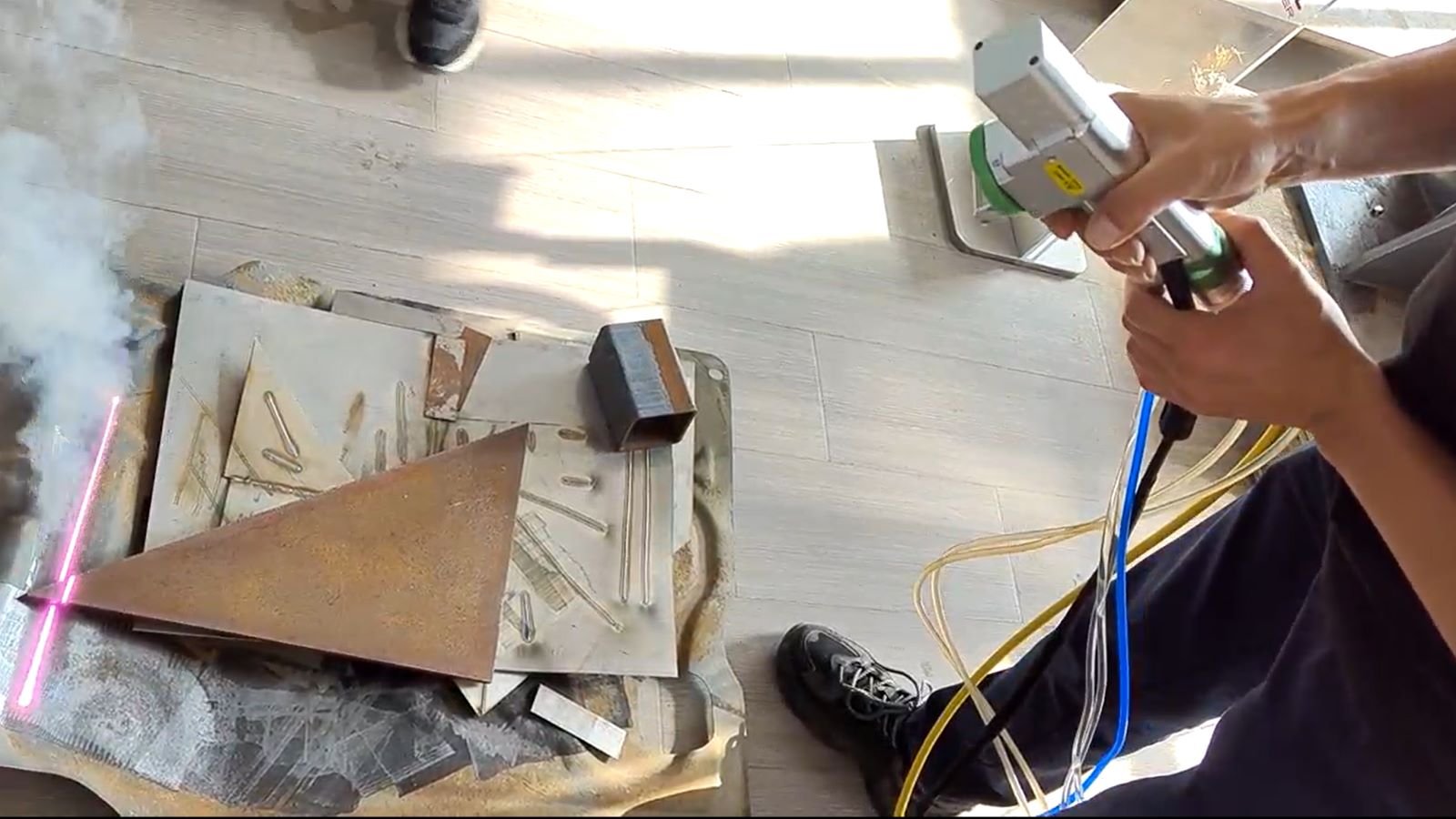
A laser rust removal machine is a laser cleaning system that uses controlled laser energy to remove unwanted contaminants from a material surface.
The basic principle is relatively simple:
Laser Energy → Surface Absorption → Contaminant Removal → Clean Surface
A focused laser beam is directed onto the contaminated surface.
Rust, oxide, paint, dirt, or other unwanted materials absorb laser energy differently from the underlying substrate.
When the laser parameters are properly selected, the contaminants can be removed while minimizing unwanted effects on the base material.
This process is commonly called:
Laser Cleaning
or
Laser Rust Removal
Although the name laser rust removal machine emphasizes rust removal, modern laser cleaning systems can perform much more than rust removal.
They can also be used for:
- Oxide removal
- Paint stripping
- Oil removal
- Grease removal
- Carbon deposit removal
- Surface dirt removal
- Coating removal
- Welding preparation
Therefore, a laser rust removal machine is better understood as a multi-purpose industrial laser surface cleaning system.
2. How Does a Laser Rust Removal Machine Work?
The laser cleaning process relies on the difference between the unwanted surface material and the underlying substrate.
For example, consider a steel component covered by rust.
The operator directs the laser beam across the rusty surface.
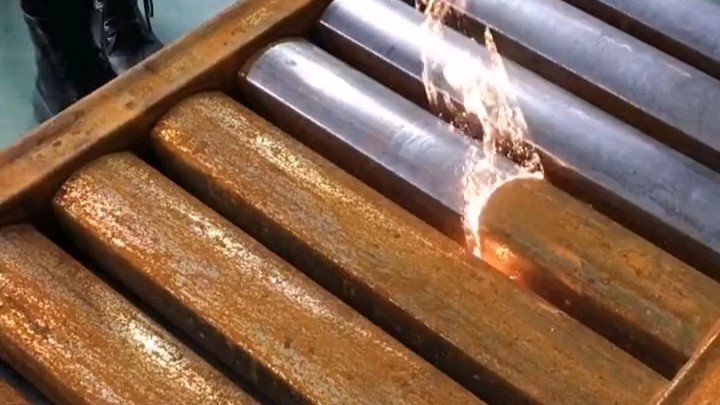
The rust absorbs laser energy and is removed through processes such as rapid heating, vaporization, thermal expansion, and other laser-material interactions.
The underlying metal can remain substantially intact when suitable parameters are used.
The exact mechanism depends on:
- Laser wavelength
- Laser power
- Pulse characteristics
- Scanning speed
- Beam size
- Material type
- Contaminant type
- Contaminant thickness
- Surface condition
This is why selecting the correct parameters is critical.
A professional laser rust removal machine manufacturer should evaluate the actual material and contamination rather than treating every cleaning application the same way.
3. Why Choose Laser Rust Removal Instead of Traditional Cleaning?
Different cleaning technologies have different advantages.
Traditional methods include:
- Grinding
- Sandblasting
- Wire brushing
- Chemical cleaning
- Dry ice cleaning
- Manual scraping
Laser cleaning introduces a non-contact cleaning method.
Non-Contact Processing
The laser beam does not mechanically touch the workpiece.
This can be particularly useful for surfaces where mechanical abrasion is undesirable.
No Abrasive Media
Unlike sandblasting, laser cleaning does not require a continuous supply of abrasive media.
Reduced Consumables
The process can reduce dependence on grinding wheels, abrasive materials, and some chemical cleaning agents.
Precise Cleaning
The laser beam can be controlled and scanned across specific areas.
Flexible Applications
A handheld laser cleaning system can be moved around large components and difficult-to-access surfaces.
Reduced Secondary Surface Damage
When correctly configured, laser cleaning can selectively remove contaminants while preserving the underlying substrate.
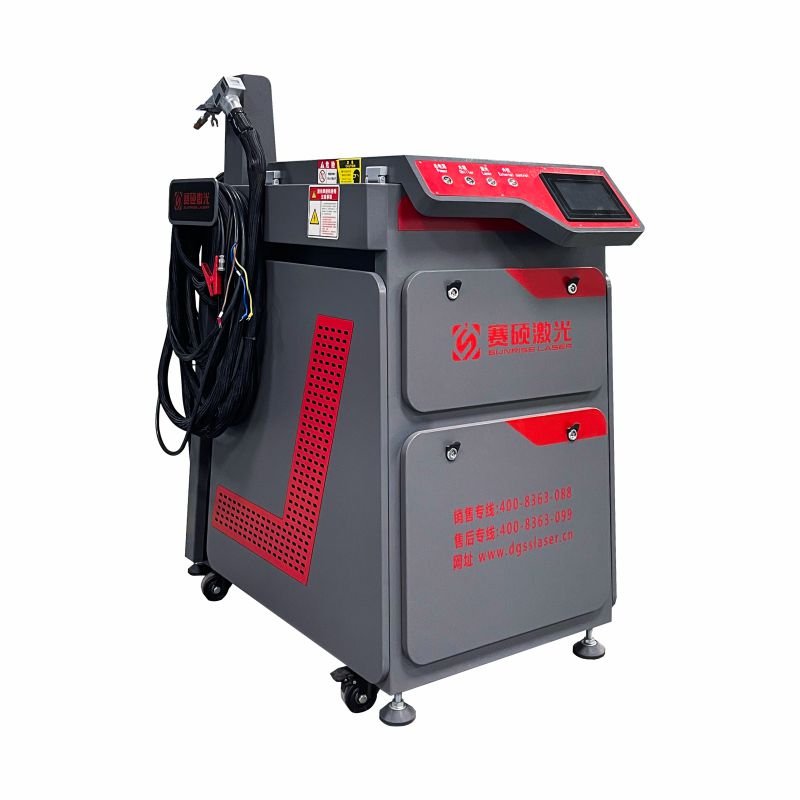
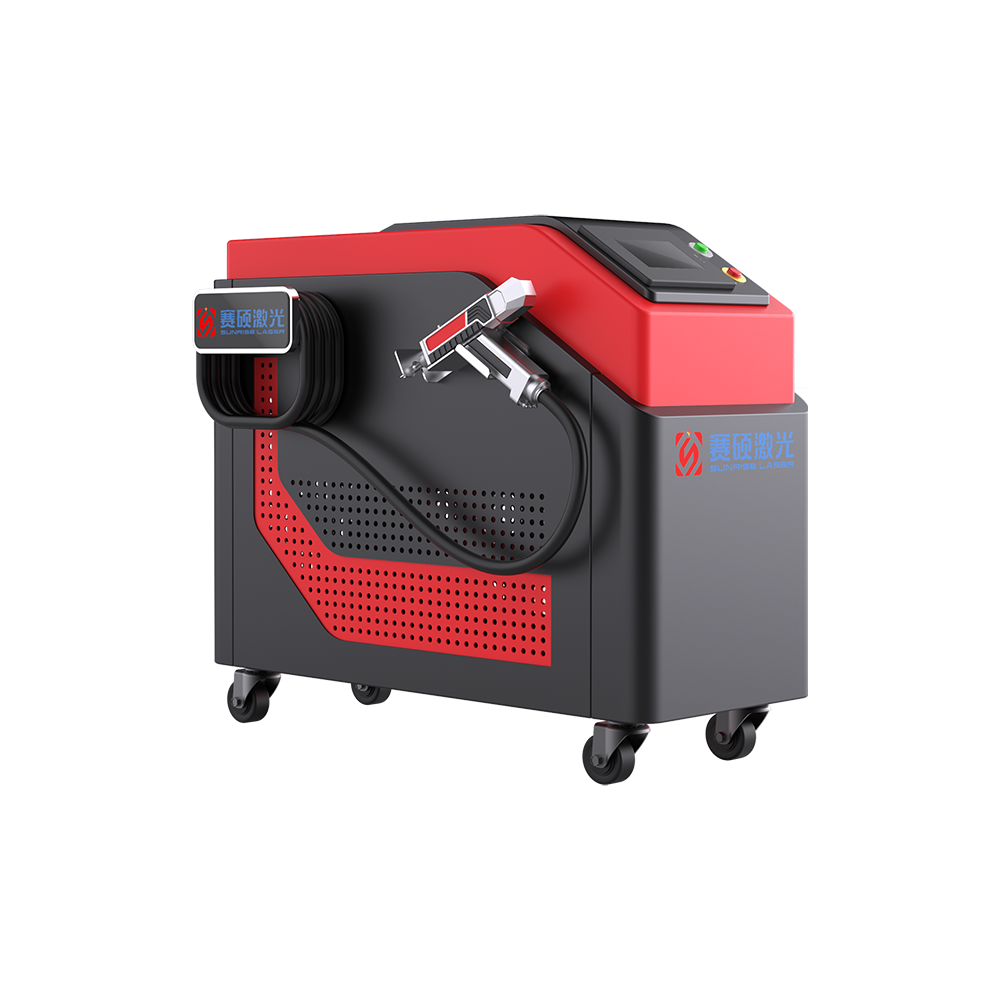
4. Sunrise Laser Rust Removal Machine Product Range
Sunrise Laser provides several laser rust removal machine series.
Our main product families include:
- Mini Series
- BG Series
- TC Series
The available power range is:
1000W–3000W
Different series can be selected according to:
- Cleaning area
- Rust thickness
- Material
- Contaminant type
- Cleaning speed
- Operator requirements
- Production volume
- Portability
The objective is to match the machine to the actual application.
5. Mini Series Laser Rust Removal Machine
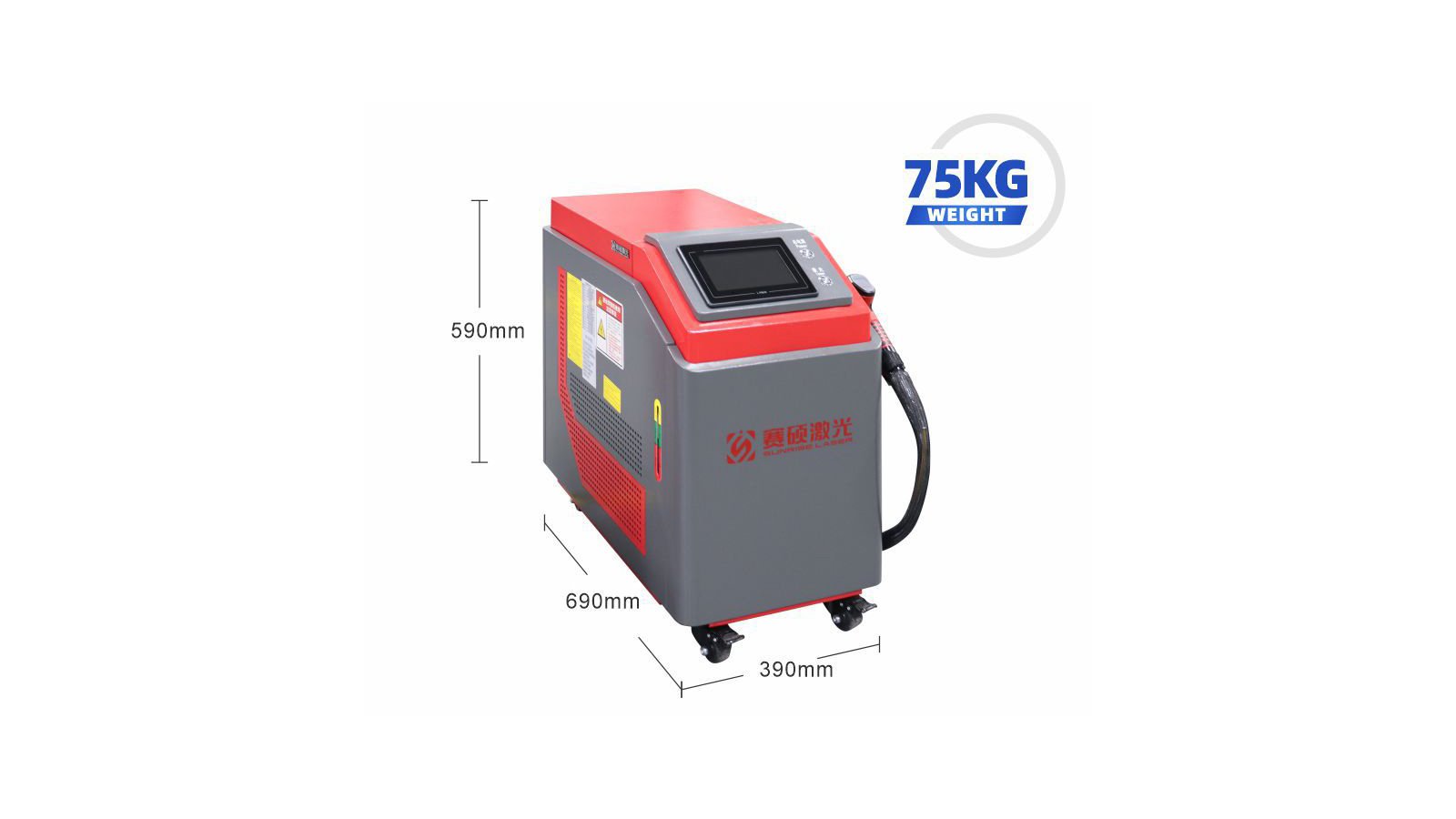
The Mini Series laser rust removal machine is designed for users who prioritize compact equipment, portability, and operational flexibility.
A compact handheld laser cleaning system can be useful for:
- Workshops
- Maintenance teams
- Repair operations
- Small and medium-sized components
- On-site cleaning
- Equipment maintenance
Potential applications include:
- Metal parts
- Tools
- Machinery components
- Stainless steel surfaces
- Rusted brackets
- Welded structures
The Mini Series can provide a practical solution for users who need laser cleaning without a large industrial installation.
6. BG Series Laser Rust Removal Machine
The BG Series is designed for users requiring stronger cleaning performance and broader industrial application capabilities.
Depending on configuration, BG Series systems can be used for:
- Heavy rust
- Oxide removal
- Paint removal
- Industrial equipment cleaning
- Metal surface preparation
- Welding preparation
The series can be suitable for workshops and manufacturers that require a more powerful handheld laser cleaning solution.
7. TC Series Laser Rust Removal Machine
The TC Series laser rust removal machine is another Sunrise Laser solution for industrial surface cleaning.
It can be configured for applications requiring:
- Higher cleaning productivity
- Larger surface areas
- Industrial maintenance
- Rust removal
- Paint removal
- Oxide cleaning
The appropriate TC Series configuration depends on the customer’s material, contamination, required cleaning speed, and production environment.
8. 1000W Laser Rust Removal Machine
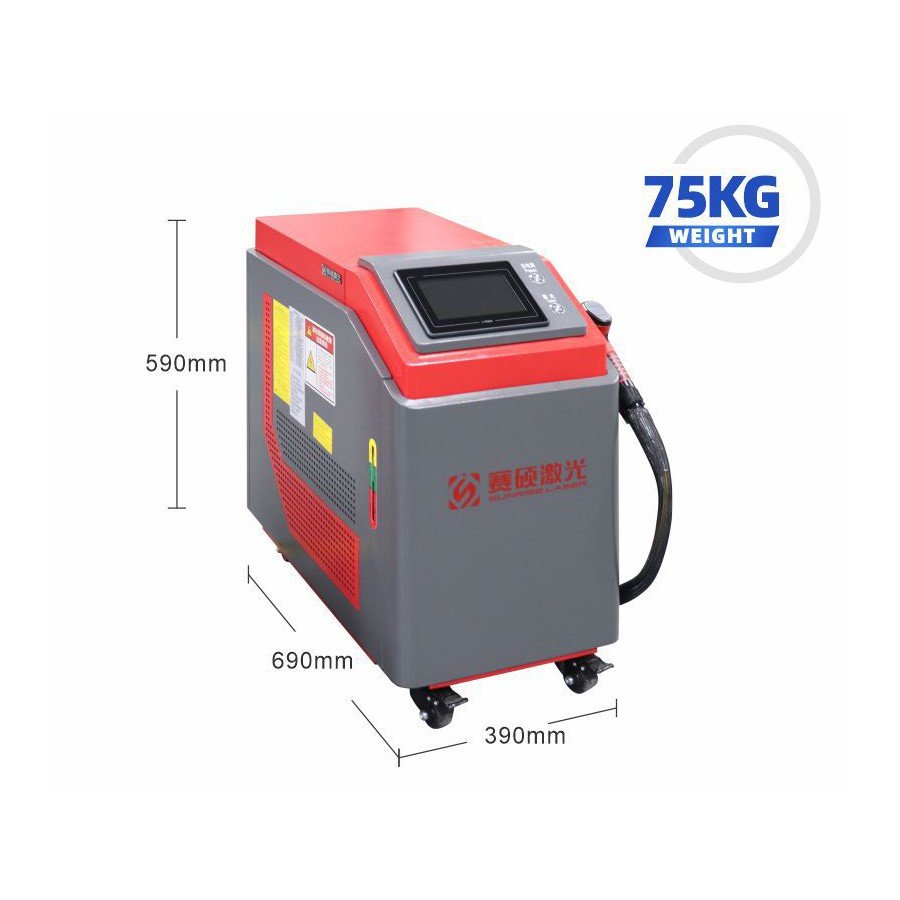
A 1000W laser rust removal machine can be considered for light-to-medium industrial cleaning applications.
Typical applications may include:
- Surface rust
- Light oxidation
- Oil contamination
- Dirt
- Welding preparation
- Metal parts cleaning
The actual cleaning speed depends on the contaminant and material.
A higher nominal power does not automatically guarantee better results. The correct combination of laser power and process parameters is more important.
9. 1500W Laser Rust Removal Machine
A 1500W laser rust removal machine provides additional processing capability for users who need greater cleaning productivity.
Potential applications include:
- Stainless steel
- Carbon steel
- Machinery components
- Metal frames
- Industrial parts
- Rusted structures
The 1500W configuration can be considered for workshops that require more productivity than a lower-power system can provide.
10. 2000W Laser Rust Removal Machine
A 2000W laser rust removal machine can provide higher cleaning productivity for suitable industrial applications.
It may be used for:
- Heavy surface rust
- Oxide removal
- Paint removal
- Large metal structures
- Industrial equipment
- Metal fabrication
The final performance depends on the type and thickness of contamination and the material being processed.
11. 3000W Laser Rust Removal Machine
The 3000W laser rust removal machine is designed for demanding cleaning applications where higher processing productivity is required.
Potential applications include:
- Large steel structures
- Heavy rust removal
- Industrial equipment
- Machinery refurbishment
- Large metal components
- Surface preparation
High-power laser cleaning should be evaluated through application testing because excessive energy can affect certain substrates or surface finishes.
12. What Materials Can a Laser Rust Removal Machine Clean?
Laser cleaning can be applied to many metal substrates.
Common materials include:
Carbon Steel
Carbon steel is one of the most common materials for rust removal.
Applications include:
- Machinery
- Frames
- Steel structures
- Tools
- Equipment
Stainless Steel
Laser cleaning can remove suitable:
- Surface contamination
- Oxide layers
- Welding discoloration
- Dirt
- Rust
from stainless steel surfaces.
Aluminum
Laser cleaning can be used for suitable aluminum applications, but parameter control is particularly important because aluminum has different thermal and optical characteristics from steel.
Cast Iron
Laser cleaning can be useful for restoring suitable cast-iron components and machinery parts.
Other Metals
Depending on the application, laser cleaning may also be used for other metal alloys.
Application testing should be performed before production use.
13. What Can a Laser Rust Removal Machine Remove?
The name suggests rust removal, but the application range is much broader.
Rust
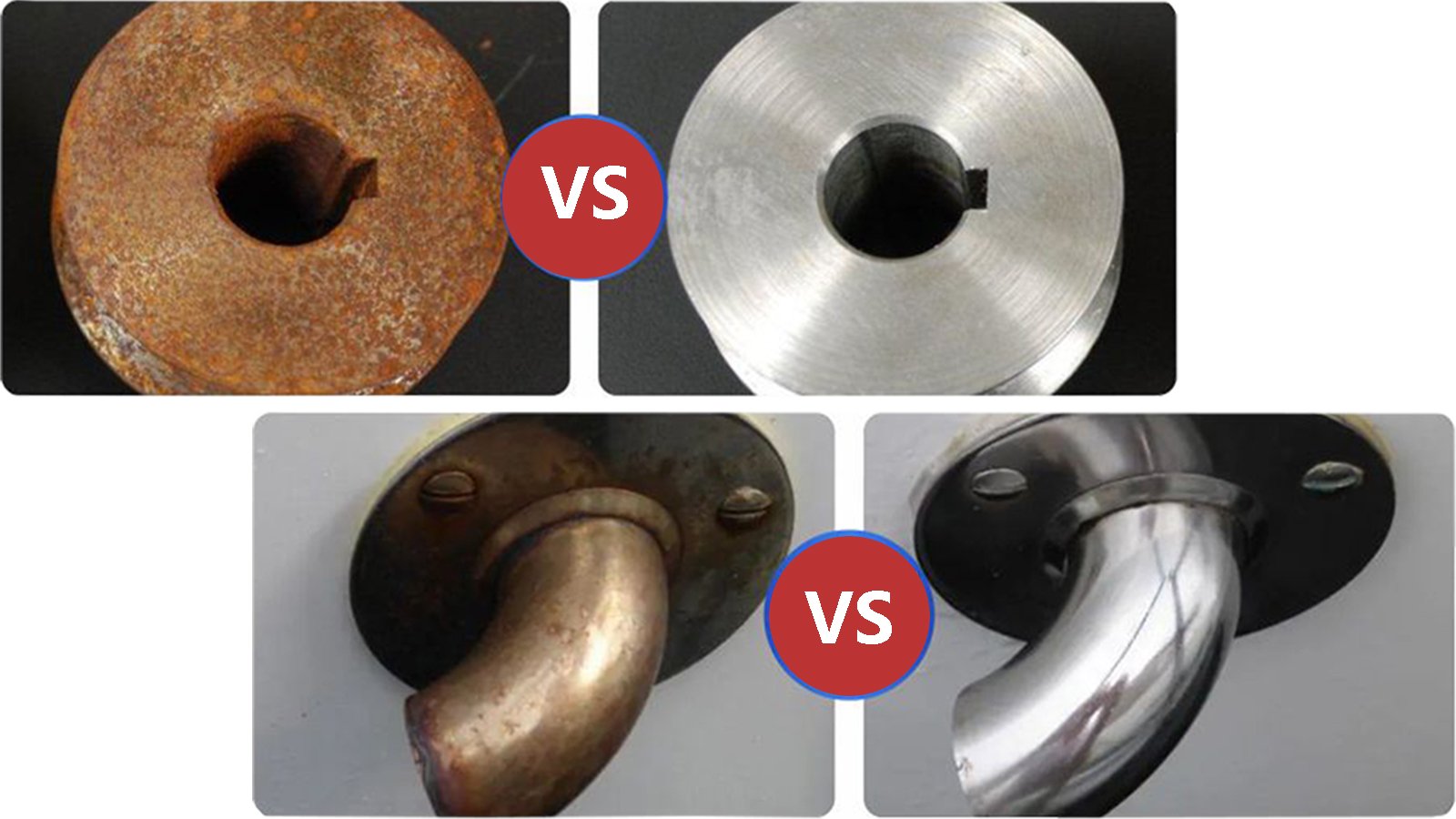
Laser cleaning can remove surface rust from suitable metal substrates.
Oxide Layers
Laser cleaning can remove certain oxide layers generated during:
- Heating
- Welding
- Manufacturing
- Long-term exposure
Oil and Grease
Suitable laser cleaning parameters can remove certain oil and grease contamination from metal surfaces.
Paint
Laser cleaning can remove certain coatings and paint layers.
Dirt
Industrial equipment may accumulate dirt and deposits over time.
Laser cleaning can remove suitable surface contamination without direct mechanical contact.
Welding Residue
Laser cleaning can be used for suitable welding-related surface preparation and cleaning.
14. Laser Rust Removal for Welding Preparation
Surface preparation is important before welding.
Rust, paint, oil, and contamination can affect the welding process.
A laser rust removal machine can be used to prepare suitable metal surfaces before welding.
The process can be:
Contaminated Surface → Laser Cleaning → Clean Metal Surface → Welding
This can help manufacturers improve surface preparation consistency.
For production environments, laser cleaning can also be integrated into automated manufacturing processes.
15. Laser Rust Removal for Post-Welding Cleaning
Welding can create:
- Oxide
- Discoloration
- Surface residue
- Heat-affected surface contamination
For stainless steel and other suitable metals, laser cleaning can be used as a post-welding surface treatment.
This can help reduce manual cleaning and improve the appearance of finished components.
For visible products such as:
- Stainless steel furniture
- Kitchen equipment
- Medical equipment
- Railings
- Metal structures
surface appearance can be an important quality factor.
16. Laser Rust Removal for Machinery Maintenance
Industrial machinery may accumulate:
- Rust
- Oil
- Grease
- Dirt
- Carbon deposits
- Coatings
Traditional cleaning methods may require disassembly, abrasive media, or chemicals.
A handheld laser rust removal machine can provide a flexible method for cleaning accessible metal surfaces.
Potential applications include:
- Machine frames
- Mechanical components
- Gears
- Tools
- Fixtures
- Industrial equipment
Because laser cleaning is non-contact, it can be useful for selected precision components where mechanical abrasion is undesirable.
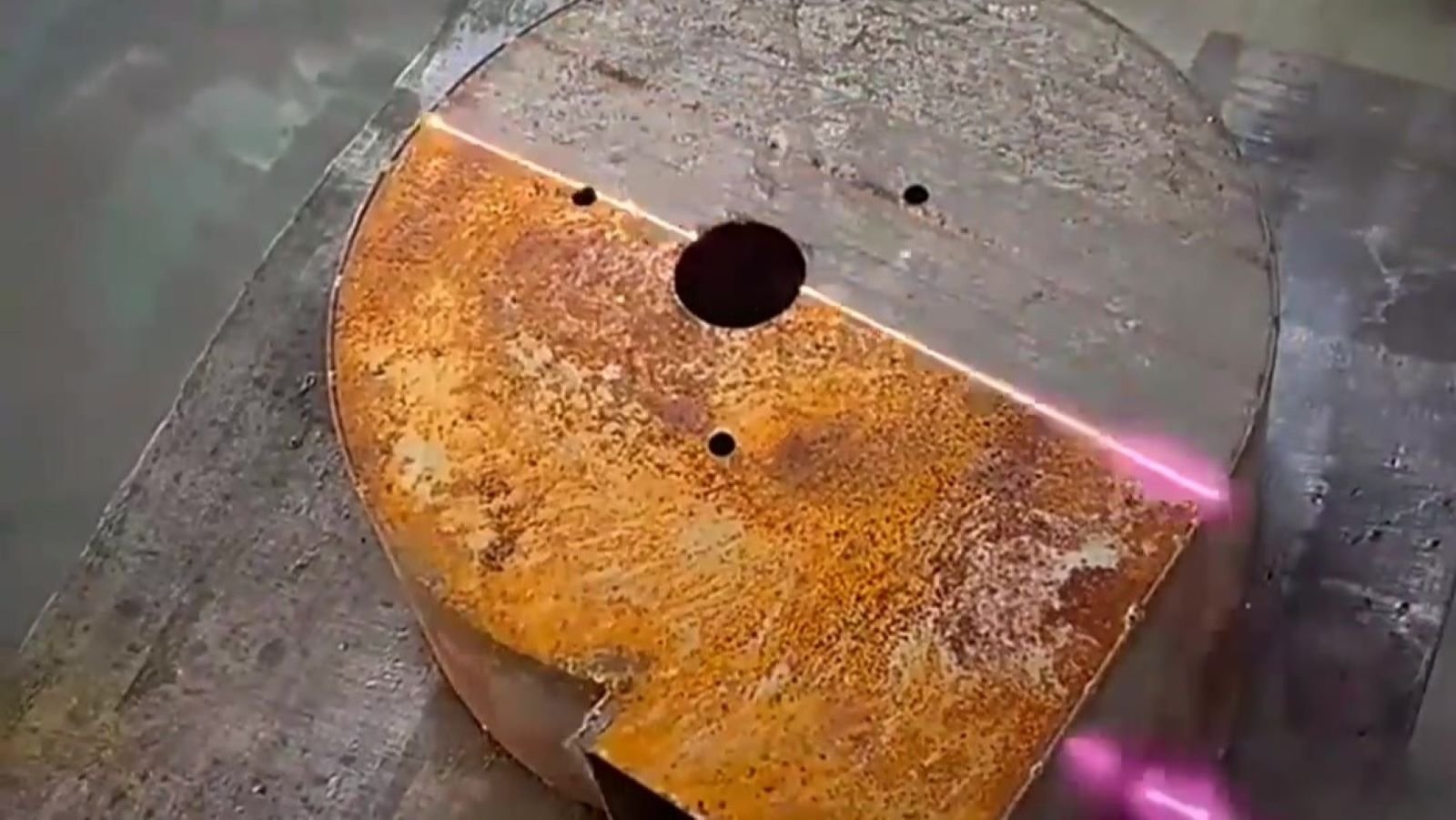
17. Laser Rust Removal for Metal Restoration
Metal products that have been stored outdoors or exposed to moisture may develop rust.
Laser cleaning can be used for suitable restoration projects involving:
- Metal structures
- Machinery
- Tools
- Industrial components
- Metal parts
- Historical or decorative metal objects
The operator can move the handheld laser cleaning head across the contaminated area.
The process can provide localized cleaning without using abrasive blasting media.
For valuable or historical objects, professional conservation testing is strongly recommended before laser treatment.
18. Laser Rust Removal for the Automotive Industry
Automotive manufacturing and repair can involve many metal components.
Potential laser cleaning applications include:
- Engine components
- Metal brackets
- Welding areas
- Molds
- Tools
- Rusted components
- Surface preparation
Laser cleaning can be particularly useful where precise localized cleaning is required.
19. Laser Rust Removal for Shipbuilding and Heavy Industry
Large steel structures can develop rust and surface contamination.
Applications can include:
- Steel structures
- Ship components
- Heavy machinery
- Industrial frames
- Construction equipment
High-power laser cleaning systems can be considered for larger industrial surfaces.
The appropriate cleaning system depends on the required cleaning rate and contamination level.
20. Laser Rust Removal for Manufacturing
Manufacturers can use laser cleaning during different stages of production.
For example:
Raw Material Cleaning
↓
Welding Preparation
↓
Post-Welding Cleaning
↓
Surface Treatment
↓
Final Cleaning
This makes laser cleaning more than a maintenance tool.
It can become part of the manufacturing process itself.
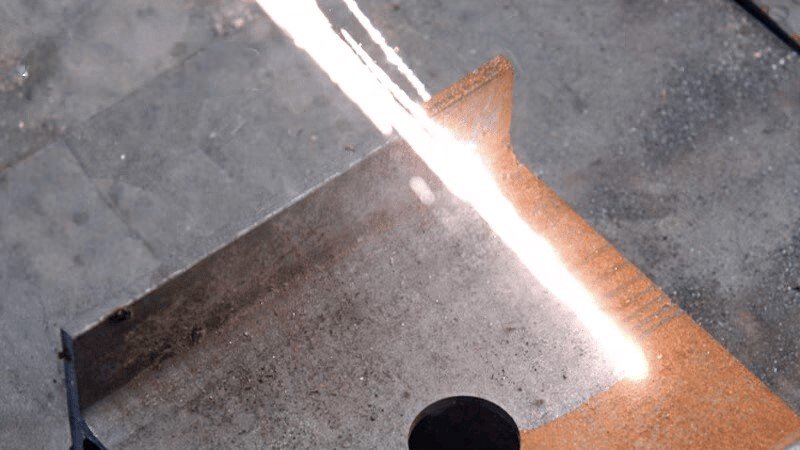
21. Handheld Laser Rust Removal Machine: Why Handheld Design Matters
A handheld laser rust removal machine provides mobility.
Instead of bringing every workpiece to a fixed cleaning station, operators can move the laser cleaning head around the component.
This is particularly useful for:
- Large workpieces
- Irregular components
- Machinery
- Steel structures
- On-site maintenance
- Repair operations
Handheld operation can also make it easier to clean:
- Corners
- Edges
- Welded joints
- Irregular surfaces
- Difficult-to-access areas
The operator should always follow appropriate laser safety procedures.
22. How to Choose a Laser Rust Removal Machine
Choosing the right laser rust removal machine requires evaluating the application.
1. Identify the Contaminant
Determine whether you need to remove:
- Rust
- Oxide
- Paint
- Oil
- Grease
- Dirt
- Welding residue
2. Identify the Base Material
Determine whether the workpiece is:
- Carbon steel
- Stainless steel
- Aluminum
- Cast iron
- Other alloy
3. Determine Contamination Thickness
Light surface rust requires different processing conditions from heavy corrosion.
4. Define Cleaning Speed
If you clean a few components per day, portability may be more important.
If you clean thousands of parts per month, productivity and automation may become more important.
5. Consider Workpiece Size
Large structures may benefit from a handheld system.
Small standardized components may benefit from a more automated solution.
6. Consider Portability
If cleaning needs to be performed at multiple locations, a compact handheld machine may be preferred.
7. Consider Future Applications
If the machine may later be used for paint removal, oxide cleaning, or welding preparation, select a flexible system.
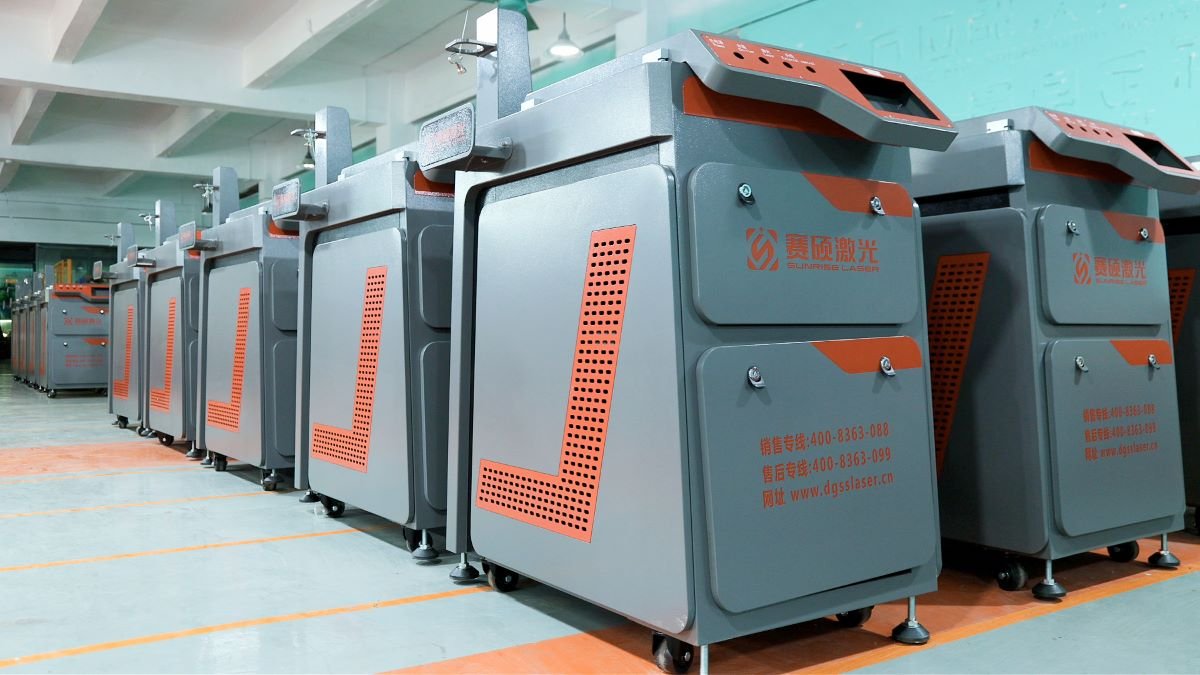
23. How to Choose Between 1000W, 1500W, 2000W and 3000W?
A simple way to think about power selection is:
Higher contamination + Larger cleaning area + Higher productivity requirement = Potentially higher laser power
However, this should not be treated as a universal formula.
For example:
A thin rust layer on stainless steel may require very different parameters from thick rust on carbon steel.
Therefore, Sunrise Laser recommends application testing before final equipment selection.
Our engineering team can evaluate:
- Material
- Rust thickness
- Surface condition
- Required cleaning speed
- Workpiece dimensions
- Cleaning area
- Production volume
and then recommend an appropriate configuration.
24. Laser Rust Removal Machine vs. Sandblasting
| Feature | Laser Cleaning | Sandblasting |
|---|---|---|
| Contact with surface | Non-contact | Abrasive contact |
| Abrasive media | Not required | Required |
| Dust generation | Generally lower | Significant |
| Consumable media | Minimal | Continuous |
| Precision | High | Moderate |
| Localized cleaning | Excellent | More difficult |
| Surface control | High | Depends on abrasive |
| Automation | High | High |
| Portability | Excellent with handheld systems | Good |
| Complex surfaces | Good | Good |
Sandblasting remains useful for many heavy-duty applications.
Laser cleaning offers a different approach when manufacturers require precision, localized cleaning, reduced abrasive consumption, or non-contact processing.
25. Laser Rust Removal Machine vs. Grinding
Grinding can effectively remove rust and coatings.
However, it is a mechanical process.
Potential limitations include:
- Abrasive wheel consumption
- Operator fatigue
- Surface abrasion
- Dust
- Difficulty reaching complex geometries
- Inconsistent manual results
A laser rust removal machine uses a non-contact process.
This can provide more controlled surface cleaning for suitable applications.
26. Laser Cleaning vs. Chemical Cleaning
Chemical cleaning can be effective for specific contaminants and industrial processes.
However, chemical methods may involve:
- Chemical consumption
- Storage
- Handling
- Waste treatment
- Worker exposure considerations
Laser cleaning is a dry process that can reduce dependence on some chemical cleaning agents.
For manufacturers seeking cleaner and more controllable surface preparation, laser cleaning can be an attractive alternative.
27. Customer Case Study: Steel Fabrication Company
A steel fabrication company needed to remove rust and surface contamination from metal components before welding and coating.
The traditional process involved manual grinding and wire brushing.
The customer experienced:
- High labor requirements
- Dust
- Uneven cleaning
- Operator fatigue
Sunrise Laser tested a handheld laser rust removal solution on representative steel components.
The laser cleaning process removed suitable surface rust and contamination before welding.
The customer improved:
- Surface preparation consistency
- Cleaning efficiency
- Operator productivity
- Accessibility of difficult areas
The handheld design was especially useful for large and irregular steel components.
28. Customer Case Study: Stainless Steel Manufacturer
A stainless steel manufacturer needed to clean oxide and surface discoloration after welding.
Manual polishing created additional labor and finishing work.
Sunrise Laser tested a suitable laser cleaning process.
The customer used the handheld laser cleaning system for suitable welded stainless steel components.
The process helped reduce manual cleaning operations and improved surface appearance consistency.
This application demonstrates that a laser rust removal machine can also serve as a post-welding surface cleaning system.
29. Customer Case Study: Machinery Refurbishment
A machinery refurbishment company needed to clean rust and old surface contamination from metal components.
The parts varied significantly in size and geometry.
A fixed cleaning system would have been inconvenient.
Sunrise Laser provided a handheld laser cleaning configuration.
The operator could move around the machine and clean suitable areas directly.
The customer improved flexibility and reduced reliance on mechanical grinding for selected cleaning operations.
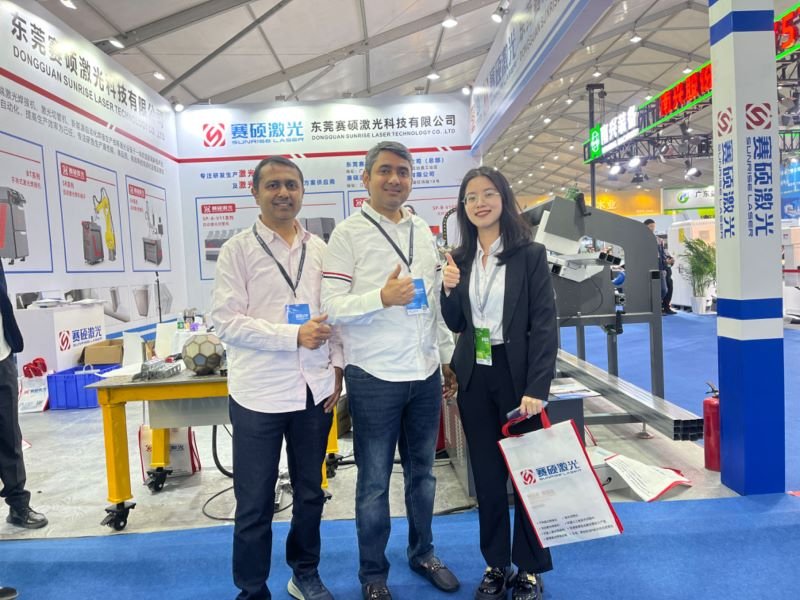
30. Customer Case Study: Metal Parts Manufacturer
A metal parts manufacturer needed to clean oil, dirt, and oxidation before subsequent processing.
The company wanted a dry cleaning process with fewer consumables.
Sunrise Laser conducted application testing and optimized the laser parameters for the customer’s material and contamination.
The resulting laser cleaning process helped standardize surface preparation before the next manufacturing step.
31. Why Choose Sunrise Laser as Your Laser Rust Removal Machine Manufacturer?
Selecting a laser rust removal machine manufacturer is about more than comparing machine prices.
The supplier should understand:
- Laser technology
- Material interaction
- Surface contamination
- Industrial production
- Equipment design
- Application testing
Sunrise Laser integrates:
R&D + Design + Manufacturing + Testing + Sales + Export + Technical Support
Our strengths include:
100+ Laser Equipment Patents
Sunrise Laser has accumulated more than 100 patents related to laser equipment.
10,000+ Customers
Our laser equipment has served more than 10,000 customers worldwide.
50+ Countries and Regions
Our equipment has been supplied to customers across more than 50 countries and regions.
1000W–3000W Product Range
Sunrise Laser provides multiple power configurations for different cleaning applications.
Multiple Product Series
Our laser rust removal product portfolio includes:
- Mini Series
- BG Series
- TC Series
Industrial Application Experience
Our laser equipment serves customers in:
- Metal fabrication
- Doors and windows
- Medical equipment
- Kitchenware
- Furniture
- LED lighting
- Machinery
- Lithium battery-related manufacturing
- Industrial maintenance
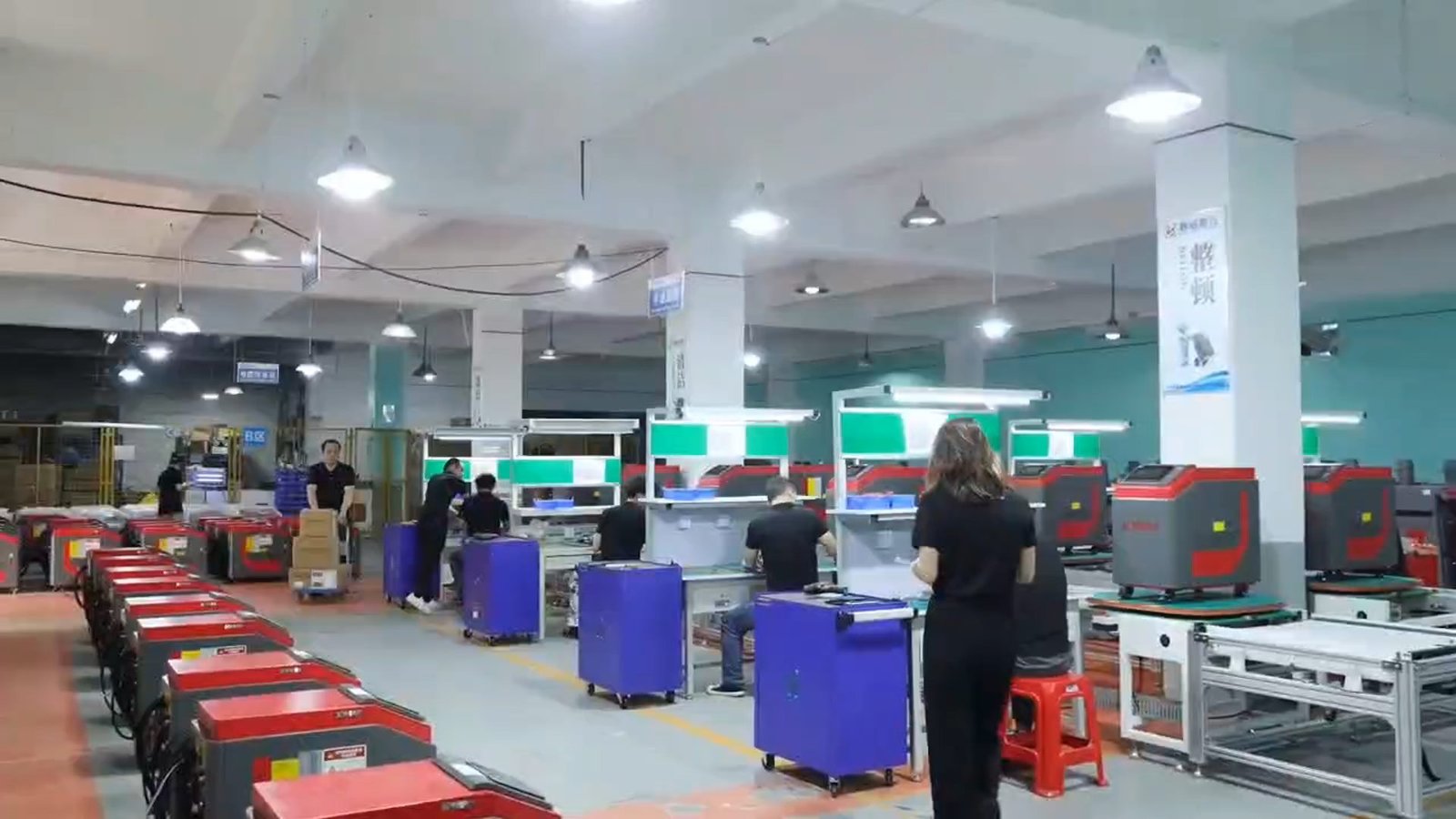
32. Laser Rust Removal Machine Factory: Manufacturing and Quality Control
As a professional laser rust removal machine factory, Sunrise Laser controls key stages of equipment production.
The manufacturing workflow includes:
Product Design
↓
Component Selection
↓
Mechanical Assembly
↓
Laser System Integration
↓
Electrical Assembly
↓
Control System Configuration
↓
Cooling System Installation
↓
Laser Cleaning Testing
↓
Quality Inspection
↓
Final Machine Testing
The performance of a laser cleaning machine depends on the coordination of multiple components.
Important systems include:
- Laser source
- Laser cleaning head
- Optical system
- Scanning system
- Control system
- Cooling system
- Electrical system
- Mechanical structure
Quality control must therefore cover the complete machine rather than a single component.
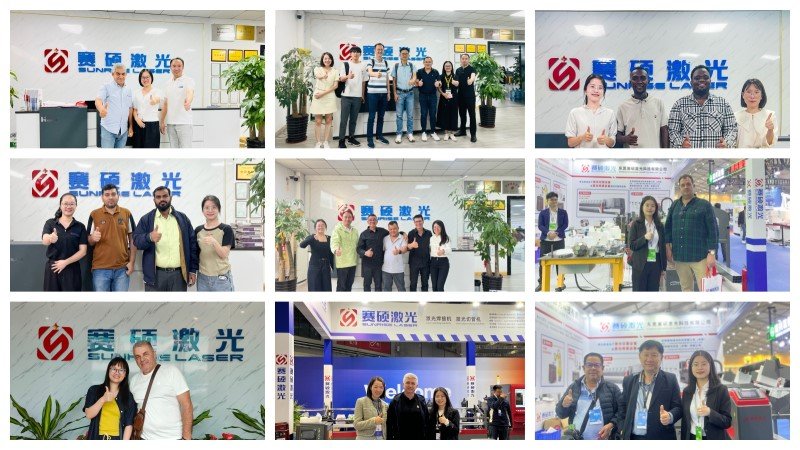
33. Customized Laser Rust Removal Solutions
Different customers have different cleaning requirements.
A customer may need to clean:
- Large steel structures
- Small precision components
- Stainless steel welds
- Heavy rust
- Paint
- Oxide
- Oil contamination
Therefore, Sunrise Laser can evaluate application requirements before recommending a machine.
Customization can involve:
- Laser power
- Cleaning head configuration
- Scanning parameters
- Machine structure
- Mobility
- Operating configuration
- Production integration
For high-volume production, automated laser cleaning systems can also be considered.
34. Laser Rust Removal for Automated Production Lines
Although handheld laser cleaning is highly flexible, laser cleaning technology is not limited to manual operation.
For standardized high-volume production, a laser cleaning system can potentially be integrated with:
- Robotic arms
- CNC systems
- Conveyor systems
- Automatic fixtures
- Vision systems
- Production lines
A typical automated process may look like:
Automatic Loading → Positioning → Laser Cleaning → Inspection → Unloading
This can provide greater production consistency and reduce manual handling.
For customers producing large quantities of standardized components, automation can provide significant advantages.
35. Important Factors That Affect Laser Cleaning Results
The performance of a laser rust removal machine depends on multiple factors.
Laser Power
Higher power can increase potential cleaning productivity, but must be matched to the substrate.
Scanning Speed
Scanning speed affects energy delivered to the surface.
Cleaning Width
A larger scanning width can increase coverage but may change energy density.
Material
Steel, stainless steel, and aluminum interact differently with laser energy.
Contamination
Rust, paint, oil, and oxide have different removal characteristics.
Surface Condition
Heavy corrosion may require different parameters from light surface oxidation.
Operator Technique
For handheld systems, operator movement can influence results.
This is why professional application testing is valuable.
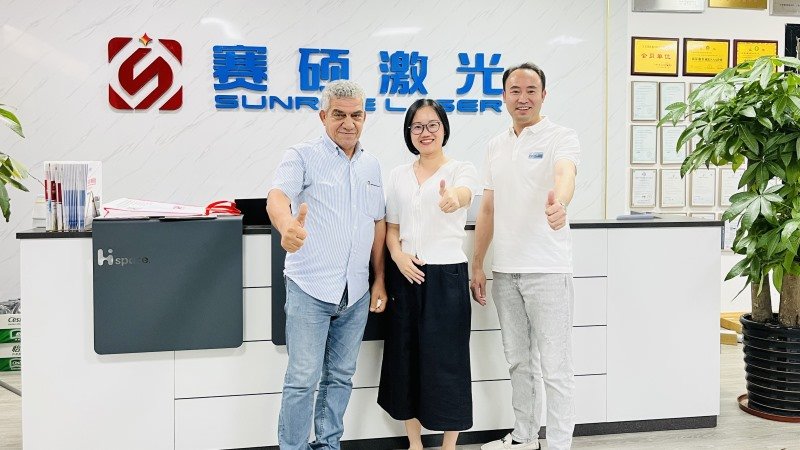
36. Laser Rust Removal Machine Safety
A laser rust removal machine uses high-energy laser radiation.
Safety must therefore be treated as a fundamental part of machine operation.
Depending on machine configuration and applicable regulations, safety measures may include:
- Laser safety enclosure or controlled area
- Appropriate protective eyewear
- Interlock systems
- Warning signs
- Emergency stop
- Fume extraction
- Fire prevention
- Operator training
- Electrical safety measures
Laser cleaning can also generate fumes or airborne particles from the removed contaminant.
Appropriate extraction and ventilation should therefore be considered.
Operators must follow the machine manufacturer’s safety instructions and applicable local regulations.
37. Frequently Asked Questions About Laser Rust Removal Machines
What is a laser rust removal machine?
A laser rust removal machine uses controlled laser energy to remove rust, oxide, paint, oil, dirt, and other surface contaminants from suitable materials.
Is laser rust removal the same as laser cleaning?
Laser rust removal is a specific application of laser cleaning. A modern laser cleaning machine can often perform additional tasks such as oxide, paint, oil, grease, and contamination removal.
What power range does Sunrise Laser offer?
Sunrise Laser offers laser rust removal machines from 1000W to 3000W.
What product series does Sunrise Laser offer?
Our main product series include the Mini Series, BG Series, and TC Series.
Can a laser rust removal machine remove heavy rust?
Yes, suitable high-power laser cleaning systems can be used for heavy rust applications. The correct power and parameters depend on rust thickness, substrate, cleaning speed, and workpiece geometry.
Can laser cleaning remove paint?
Laser cleaning can remove certain paints and coatings. Application testing should be conducted to determine suitable parameters for the specific coating and substrate.
Can laser cleaning be used on stainless steel?
Yes. Laser cleaning can be used for suitable stainless steel applications, including rust, oxide, contamination, and post-welding surface cleaning.
Can laser cleaning be used on aluminum?
Yes, suitable aluminum applications can be laser cleaned, but the process parameters must be carefully controlled.
Is laser cleaning better than sandblasting?
Neither technology is universally better. Sandblasting can be highly effective for large-scale heavy-duty cleaning, while laser cleaning offers non-contact processing, precision, localized cleaning, and reduced abrasive consumption.
Is a handheld laser rust removal machine easy to operate?
Handheld laser cleaning systems are designed for flexible operation, but operators still require appropriate training and laser safety awareness.
How do I choose between 1000W and 3000W?
Consider material, contaminant type, contamination thickness, cleaning area, required cleaning speed, and production volume. Application testing is recommended.
Can Sunrise Laser customize laser cleaning equipment?
Yes. Sunrise Laser can evaluate specific application requirements and recommend or develop an appropriate laser cleaning configuration.
Why choose Sunrise Laser?
Sunrise Laser has accumulated 100+ laser equipment patents, served more than 10,000 customers, and supplied laser equipment to customers in more than 50 countries and regions.
38. Why Sunrise Laser Is a Reliable Laser Rust Removal Machine Supplier
When purchasing a laser rust removal machine, the lowest initial price should not be the only consideration.
Manufacturers should also evaluate:
- Laser source quality
- Machine reliability
- Cleaning performance
- Application support
- Spare parts
- Training
- Technical service
- Factory manufacturing capability
- Long-term supplier stability
Sunrise Laser provides an integrated solution:
Application Analysis
→
Sample Testing
→
Machine Recommendation
→
Equipment Manufacturing
→
Quality Inspection
→
Delivery
→
Training
→
Technical Support
This allows customers to purchase a complete laser cleaning solution rather than simply a standalone laser machine.
39. How to Get the Right Laser Rust Removal Machine for Your Application
Before contacting a laser rust removal machine supplier, prepare the following information:
1. Material
For example:
Stainless steel, carbon steel, aluminum, cast iron, etc.
2. Contaminant
Rust, oxide, paint, oil, grease, dirt, or welding residue.
3. Contaminant Thickness
Describe whether the contamination is light, medium, or heavy.
4. Workpiece Size
Provide dimensions and approximate weight.
5. Cleaning Area
Indicate whether you need localized cleaning or large-area cleaning.
6. Required Productivity
For example:
- 10 parts/day
- 100 parts/day
- 1,000 parts/day
7. Photos or Samples
Photos and representative samples can help engineers understand the actual application.
With this information, Sunrise Laser engineers can evaluate the appropriate laser rust removal machine configuration.
40. Upgrade Metal Surface Cleaning with Sunrise Laser
A laser rust removal machine provides manufacturers with a modern approach to industrial surface preparation.
Instead of relying exclusively on grinding, sandblasting, or chemical cleaning, manufacturers can use controlled laser energy to remove suitable:
- Rust
- Oxide
- Paint
- Oil
- Grease
- Dirt
- Surface contamination
- Welding residue
Sunrise Laser independently develops and manufactures laser cleaning equipment from 1000W to 3000W, including the:
- Mini Series
- BG Series
- TC Series
Our handheld laser rust removal machines are designed for flexible industrial use and can be applied to many sectors, including metal fabrication, machinery, doors and windows, kitchenware, furniture, medical equipment, LED lighting, and industrial maintenance.
The major advantages of laser cleaning include:
Non-contact Processing
Precise Surface Cleaning
Reduced Abrasive Consumption
Flexible Handheld Operation
High Process Repeatability
Potential Reduction in Secondary Processing
With more than 100 laser equipment patents, more than 10,000 customers, and customers in 50+ countries and regions, Sunrise Laser has extensive experience in developing and manufacturing industrial laser equipment.
As an experienced laser rust removal machine manufacturer, laser rust removal machine factory, and laser rust removal machine supplier, Sunrise Laser provides application-focused laser cleaning solutions rather than simply selling equipment.
Whether you need to remove rust from steel structures, clean oxide from stainless steel, prepare a surface before welding, remove suitable coatings, or clean industrial machinery, Sunrise Laser can help evaluate the appropriate laser cleaning technology for your application.
The right laser rust removal machine should be selected according to the material, contaminant, contamination thickness, cleaning area, required productivity, and production environment.
Send Sunrise Laser your material information, contamination type, workpiece photos, dimensions, and cleaning requirements. Our engineering team can help determine the appropriate laser cleaning configuration for your application.
We have a leading laser welding machine factory of skilled engineers ready to support you in your product development journey from idea design to production.Any ideas about your product you can contact us freely,and our engineers will get back to you with a quote asap. WhatsApp: +86 198 5408 2298
Who is Sunrise laser?
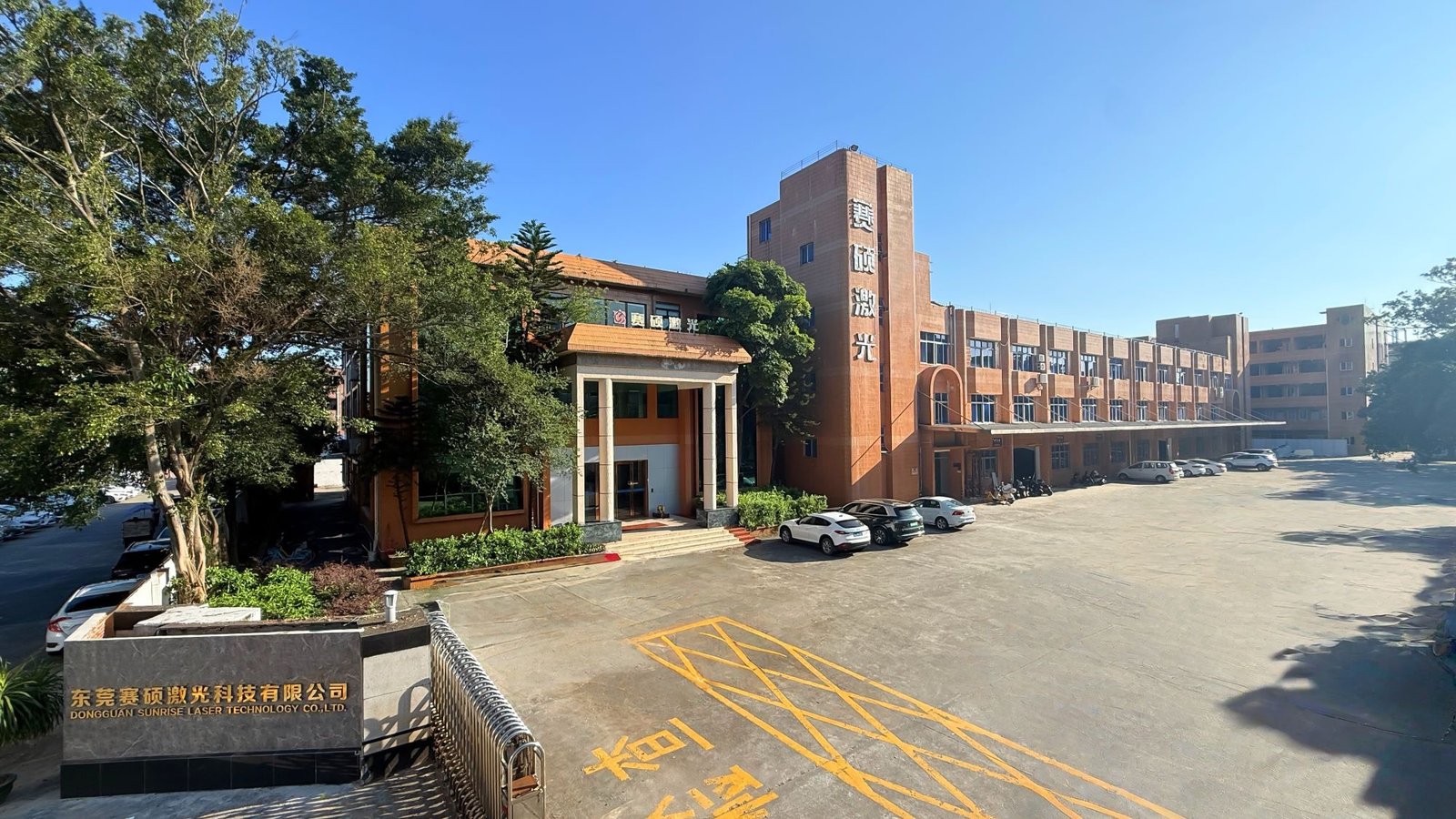
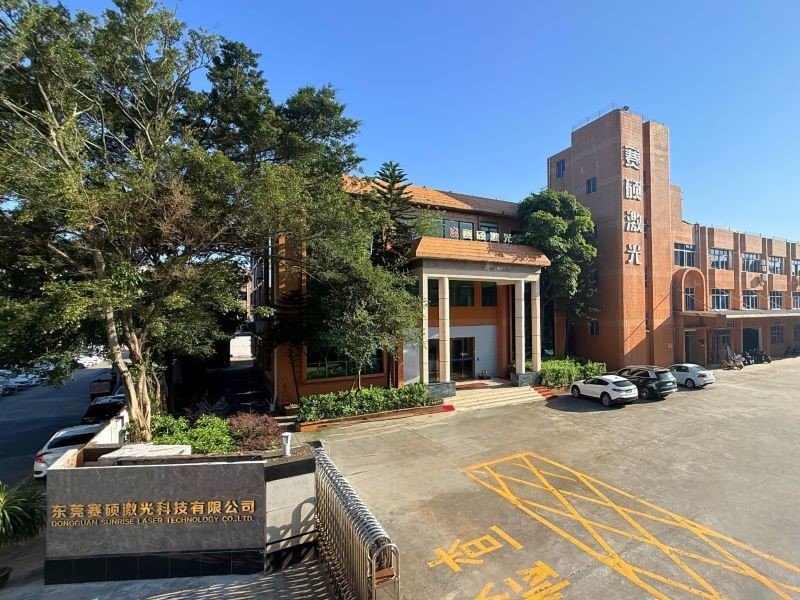
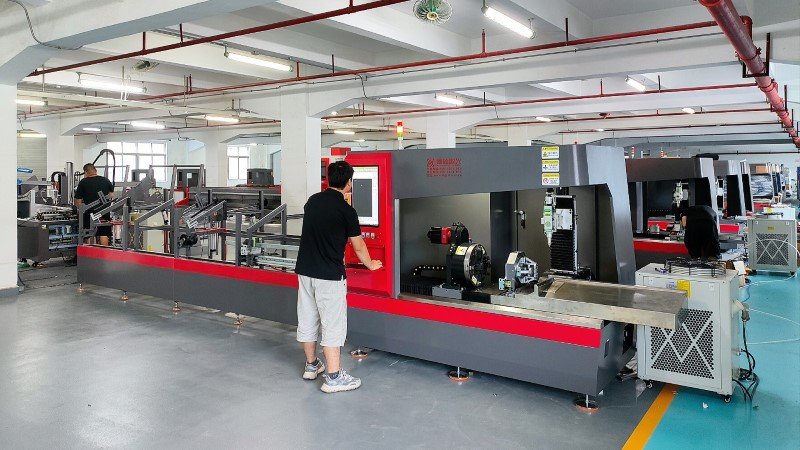
Dongguan Sunrise Laser Technology Co, Ltd. was established in 2016 with a registered capital of CNY 20.210,000 and a modern productionase of 11,000+㎡. It is a professional manufacturer dedicated to the research and development, production, and sales of high-end laser welding machine,laser tube cutting machine.
What is your product range?
We pecialize in the design and production of high quality laser machines,such as laser welding machine,laser tube cutting machine, laser rust removal machine…
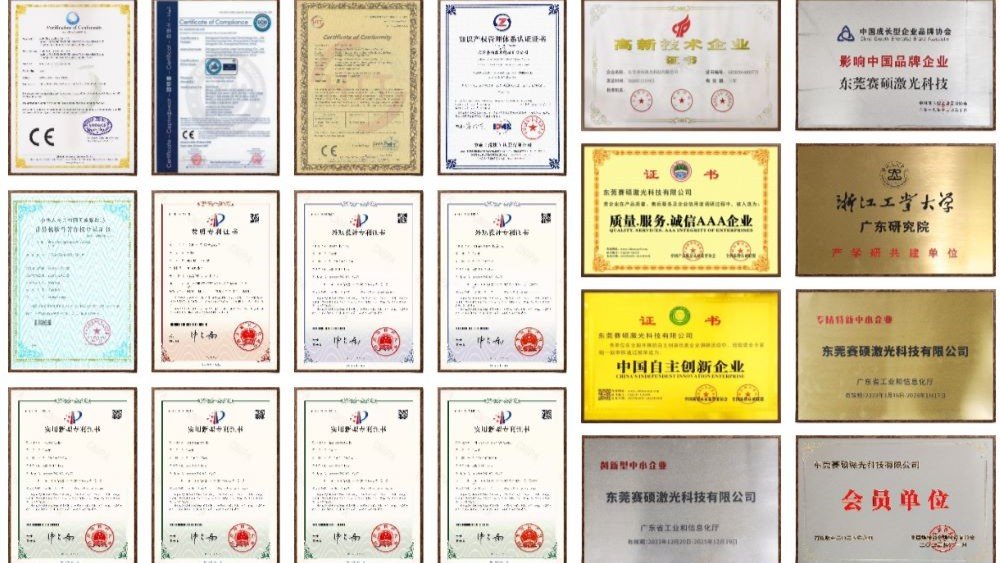
Do you have any international certifications?
We have passed ISO 9001, CE, RoHS, SGS and other certifications, and meet the mainstream standards of Europe, America, the Middle East and Asia.
What is the technical background of your team?
10-person R&D team (5 senior engineers) + 50-person production team, with an average of 8 years of experience and 100% certification rate.
Can I have my custom logo , design or size?
Sure. We support OEM and ODM services, allowing for the customization of appearance, power, dimensions, and your logo according to your requirements.You can view the OEM&ODM service page. https://sunriselasertech.com/oem-odm/
 English